
Case Study 01
Aldar Command Center
Real-Time Healthcare & Emergency Operations Dashboard

Client
Purehealth
Type
Command Center Dashboard , Real-Time Monitoring, Emergency Response System, Operational Intelligence
Industry
Healthcare
Role
Design Lead, UI/UX Strategist
Introduction
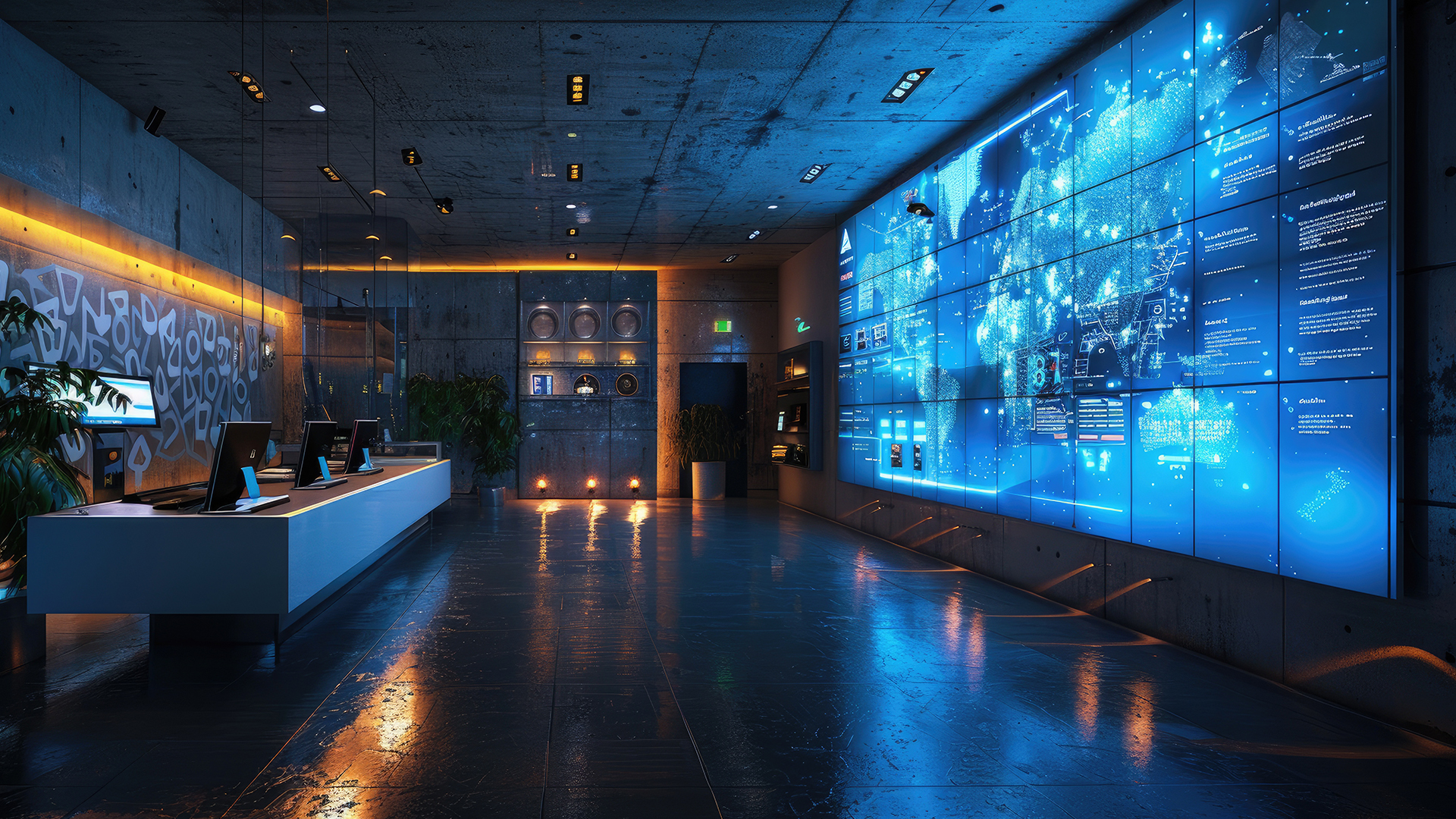
The Aldar Command Center is a large-scale, LED wall–powered platform that brings together real-time healthcare and emergency data from eight major hospitals, clinics, and Civil Defense operations across the UAE. I led this project as a Design Lead and UX Strategist, shaping a mission-critical dashboard system that supports senior leadership in monitoring operations, managing resources, and responding to incidents at speed. The platform combines operational intelligence, predictive insights, and geospatial data into a single immersive interface built for high-pressure environments.
Technologies

Project Overview
The Aldar Command Center is a real-time, LED wall–powered platform designed to centralize healthcare and emergency operations data from eight major hospitals, clinics, and Civil Defense services across the UAE. The system provides a unified view of patient flow, operational readiness, resource availability, and live incidents across outpatient, inpatient, and emergency departments.
Designed for senior leadership and emergency response teams, the platform enables fast, informed decision-making through five integrated modules: Hospital Overview, Readiness Hub, Resource Management, Emergency Department Data, and Incident Response. By combining live data, predictive insights, and immersive geospatial visualization into a single interface, the command center enhances operational efficiency, coordination, and national emergency preparedness in high-pressure environments.

User Research & Pain Points
As Design Lead and UX Strategist, I collaborated with hospital CEOs, CTOs, and emergency coordinators to address fragmented data and delayed visibility across hospitals and Civil Defense systems. OP, IP, and ED workflows lacked clarity, and resource tracking was inconsistent. I designed dedicated dashboards for each workflow, a centralized Readiness & Resource Management hub, and an interactive Incident Response module with live geospatial mapping—enabling leadership to monitor operations and respond to incidents quickly and confidently.

Key Solutions Implemented for Identified Problems
| Identified Problem | Key Solution Implemented |
|---|---|
| Fragmented data across hospitals and Civil Defense | Centralized platform integrating hospital and Civil Defense data in real-time |
| Delayed awareness of critical incidents | Live Incident Response module with geospatial mapping and real-time alerts |
| OP, IP, and ED data not clearly separated | Dedicated dashboards for OP, IP, and ED metrics for clearer visibility |
| Limited visibility into hospital capacity | Hospital Readiness Hub showing beds, staff, and operational status |
| Resource management gaps (medicine, blood, staff) | Hospital Resource Management module with live inventory and HR data |
| Difficulty tracking patient flow across multiple facilities | Interactive hospital overview with patient flow visualizations |
| Emergency coordination inefficiencies | Incident cards showing nearest hospitals, incident type, and status |
| Lack of predictive insights for resource allocation | Prioritized alerts and analytics for proactive decision-making |
| Complex data visualization for senior leadership | LED wall-powered large-scale visualization with clear hierarchy and information design |
| Slow decision-making during high-pressure events | Intuitive, single-pane interface for fast, informed operational decisions |

Technical Implementation
The Aldar Command Center leverages advanced web technologies to deliver a highly interactive, real-time monitoring platform. The Incident Response module uses Mapbox 3D maps to visualize accidents and emergency events across Abu Dhabi, providing live updates and geospatial context. Hospitals are represented with detailed 3D building models, enhanced with animated overlays that reflect operational status, department activity, and resource availability. Additional animations highlight changes in patient flow, bed occupancy, and emergency department activity, creating a dynamic and intuitive visualization for senior leadership. This combination of real-time data, 3D visualization, and animation ensures critical insights are immediately accessible and actionable on the LED wall display.


Results & Key Metrics
| Result / Metric | Impact / Description |
|---|---|
| Faster Incident Response | Reduced time to detect and respond to critical events using real-time alerts |
| Improved Decision-Making | Senior leadership can make informed decisions quickly with centralized dashboards |
| Clear OP/IP/ED Insights | Separation of patient flows enables better resource allocation and operational planning |
| Optimized Resource Management | Live visibility into beds, staff, medicine, and blood supply reduces shortages |
| Enhanced Emergency Coordination | Incident Response module enables rapid coordination between hospitals and Civil Defense |
| Increased Operational Efficiency | Centralized LED wall view reduces time spent gathering data from multiple sources |
| Real-Time Alerts | Immediate notifications for high-priority events improve reaction times |
| Predictive Insights | Prioritized alerts and analytics support proactive decision-making |
| Reduced Bottlenecks in ED | Monitoring of patient flow and department status allows quicker handling of congestion |
| Improved Overall Healthcare Preparedness | Integrated, large-scale visualization supports strategic planning and emergency readiness |
The Aldar Command Center has significantly enhanced the efficiency and effectiveness of day-to-day operations for command center operators. By providing a centralized, real-time view of hospital and emergency data, operators can quickly identify critical alerts, monitor patient flows, and manage resources without switching between multiple systems. The separation of OP, IP, and ED dashboards, along with interactive 3D hospital models and live incident mapping, allows operators to make rapid, informed decisions and coordinate responses with minimal delays. This streamlined workflow reduces operational bottlenecks, improves situational awareness, and ensures that hospitals and emergency teams remain proactive rather than reactive, ultimately strengthening the UAE’s overall healthcare and emergency response readiness.

Before

After
The design and UX of the Aldar Command Center have made a remarkable difference in how our teams interact with complex data. The dashboards are intuitive, the separation of OP, IP, and ED flows is clear, and the 3D hospital visualizations make understanding operations immediate and effortless. The interactive incident response tools allow our leadership to act quickly and confidently. The team’s attention to user experience and thoughtful design has truly elevated the way we manage healthcare and emergency operations.

Mohammed Hassan - Chief of Critical Infrastructure Officer
Conclusion & Key Takeaways
Designing the Aldar Command Center reinforced the importance of clarity, hierarchy, and real-time visualization when working with complex, high-stakes data. Separating OP, IP, and ED workflows, integrating 3D hospital models, and implementing interactive incident maps highlighted how thoughtful UX can directly impact operational efficiency and decision-making. I learned that designing for senior leadership and emergency operators requires balancing detailed data with simplicity and speed, ensuring critical insights are immediately actionable. The project also emphasized the value of immersive, LED wall experiences and animation in creating intuitive, engaging interfaces that enhance situational awareness in real-world environments.